

As a gaming industry veteran, I’ve watched video game developers transform simple ideas into immersive digital worlds that captivate millions. These skilled professionals combine creativity with technical expertise to craft the games we love to play.
Video game developers are the architects behind every aspect of game creation – from writing code and designing characters to implementing gameplay mechanics and fixing bugs. They’re not just programmers; they’re storytellers, problem-solvers, and innovators who work tirelessly to bring virtual experiences to life. I’ve seen firsthand how this dynamic career path has evolved from simple 8-bit games to today’s stunning virtual reality experiences.
Key Takeaways
- Video game developers are technical professionals who combine programming expertise with creativity to transform concepts into playable digital experiences
- Core responsibilities include writing code for game mechanics, implementing AI systems, optimizing performance, and developing gameplay features using languages like C++, C#, and Unity
- Essential skills combine technical programming expertise (object-oriented programming, algorithms, 3D mathematics) with problem-solving abilities and creative vision
- Career paths can lead to specialized roles like Game Engine Programmer, Graphics Programmer, or AI Programmer, with salaries ranging from $50,000 for entry-level to $250,000+ for technical directors
- Industry opportunities exist in both major game studios (offering stability and higher salaries) and indie development (providing creative freedom and direct project ownership)
What Does a Video Game Developer Do?
Video game developers transform creative concepts into playable digital experiences through specialized programming skills. Here’s a detailed look at their core responsibilities:
Game Programming and Coding
Game developers write efficient code using programming languages like C++, C# and Unity to build game functionality. I specialize in coding core systems that control:
- Character movement mechanics
- Physics simulations for realistic object interactions
- Artificial intelligence for non-player characters
- Memory management optimization
- Network connectivity for multiplayer features
- Bug detection and performance testing
- Combat systems with balanced difficulty curves
- Resource management mechanics
- Level progression frameworks
- Achievement and reward structures
- User interface elements
- Interactive environment triggers
- Player feedback systems through visual and audio cues
| Programming Language | Common Use Case | Development Platform |
|---|---|---|
| C++ | Game engines | Unreal Engine |
| C# | Cross-platform | Unity |
| JavaScript | Web-based games | HTML5 |
| Python | Rapid prototyping | PyGame |
| Lua | Game scripting | LÖVE |
Essential Skills for Video Game Developers


Video game developers combine technical expertise with creative abilities to craft engaging digital experiences. The following skills form the foundation of successful game development careers.
Technical Programming Skills
Professional game developers master multiple programming languages including C++, C#, Unity, Unreal Engine. Experience with source control systems like Git enables efficient code management while knowledge of 3D mathematics, physics engines, graphics programming enhances game functionality. Developers utilize:
- Object-oriented programming principles for organized, reusable code
- Algorithm optimization techniques for smooth gameplay performance
- Database management for handling game data storage
- API integration for online multiplayer features
- Cross-platform development practices for multiple device deployment
- Debugging complex systems to identify performance bottlenecks
- Optimizing game mechanics for balanced difficulty progression
- Creating efficient workarounds for hardware limitations
- Developing scalable solutions for multiplayer networking issues
- Implementing alternative approaches when standard methods fail
- Analyzing player feedback data to improve gameplay elements
| Core Technical Skills | Proficiency Level Required |
|---|---|
| C++ Programming | Advanced |
| Game Engines (Unity/Unreal) | Intermediate-Advanced |
| 3D Mathematics | Intermediate |
| Version Control | Intermediate |
| Graphics Programming | Intermediate-Advanced |
Types of Video Game Developers


Video game development teams consist of specialized programmers who focus on distinct aspects of game creation. Each role requires specific technical expertise and contributes uniquely to the development process.
Game Engine Programmers
Game engine programmers create the foundational framework that powers video games. They develop core systems for physics simulation, memory management optimization routines, rendering pipelines, sound systems, networking capabilities, input handling mechanisms and resource management tools. These developers work with established engines like Unreal Engine or Unity, or build custom engines from scratch using C++ or similar low-level programming languages.
Graphics Programmers
Graphics programmers specialize in creating visual elements and rendering systems for video games. They implement shader programs, optimize rendering pipelines, manage texture compression techniques and develop lighting systems. These developers use OpenGL, DirectX or Vulkan APIs to create realistic 3D environments, particle effects, dynamic shadows and advanced post-processing effects while maintaining optimal performance across different hardware configurations.
AI Programmers
AI programmers design and implement intelligent behavior systems for non-player characters (NPCs) in games. They create pathfinding algorithms, decision-making systems, behavioral trees and state machines that control NPC actions. These developers use machine learning techniques to develop adaptive difficulty systems, procedural content generation tools and dynamic response mechanisms that enhance gameplay experiences through realistic character interactions and environmental responses.
| Developer Type | Primary Languages | Key Tools |
|---|---|---|
| Game Engine | C++, C# | Visual Studio, CMake |
| Graphics | HLSL, GLSL, C++ | RenderDoc, GPU Profilers |
| AI | Python, C++, C# | TensorFlow, Behavior Trees |
Career Path and Education Requirements
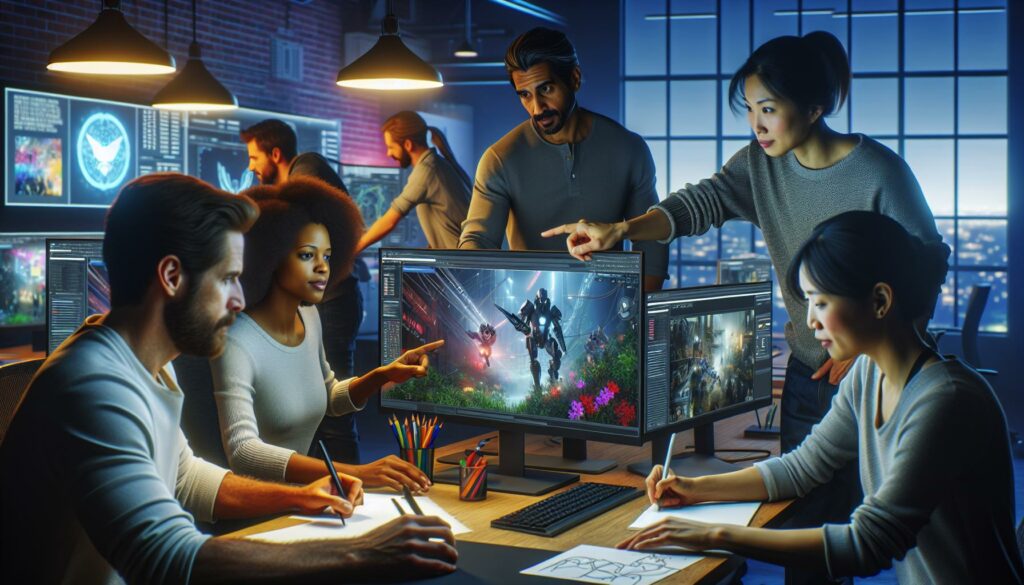

Educational pathways into video game development combine formal education with practical skill development. The career trajectory focuses on both academic credentials and hands-on experience in game creation.
Degree Programs and Certifications
A bachelor’s degree in computer science, software engineering or game development forms the foundation for a career in game development. Specialized programs offer courses in:
- Game Design Fundamentals
- Computer Graphics Programming
- Advanced Mathematics (Linear Algebra, Calculus)
- Object-Oriented Programming
- Game Engine Architecture
- Software Development Methodologies
Professional certifications enhance career prospects:
- Unity Certified Developer
- Unreal Engine Certification
- Microsoft Technology Associate (MTA)
- AWS Certified Developer
- Google Play Store Developer Certification
Industry Experience and Portfolio Building
Professional experience stems from internships, personal projects and collaborative development efforts. A strong portfolio includes:
Project Components:
- Completed Games (Mobile, PC, Console)
- Technical Demonstrations
- Source Code Examples
- Bug Fixing Documentation
- Performance Optimization Records
Industry Experience Opportunities:
- Game Development Internships
- Independent Game Projects
- Game Jams
- Open Source Contributions
- Modding Community Participation
| Career Level | Years Experience | Required Portfolio Items |
|---|---|---|
| Entry Level | 0-2 | 2-3 completed projects |
| Mid-Level | 3-5 | 4-6 published games |
| Senior | 6+ | 8+ commercial titles |
Working in the Gaming Industry
The gaming industry presents diverse opportunities across different development environments, each with unique characteristics and career trajectories. Working in game development offers multiple paths based on individual preferences and professional goals.
Major Game Studios vs. Indie Development
Major game studios provide structured environments with established workflows, specialized teams, and large-scale projects. AAA studios like Ubisoft, Electronic Arts and Rockstar Games offer comprehensive benefits packages, stable salaries ($85,000-$150,000), and access to cutting-edge technology. In contrast, indie development emphasizes creative freedom, flexible schedules, and direct project ownership. Independent developers typically earn $45,000-$90,000 through revenue sharing and digital distribution platforms like Steam or Epic Games Store.
| Development Type | Average Salary Range | Team Size | Project Duration |
|---|---|---|---|
| AAA Studios | $85,000-$150,000 | 50-200+ | 2-5 years |
| Indie Studios | $45,000-$90,000 | 1-15 | 6 months-2 years |
- Technical Director: Leads development teams after 8-10 years of experience
- Lead Programmer: Oversees specific game systems with 5-7 years of expertise
- Engine Architect: Designs core systems after mastering multiple platforms
- Game Producer: Manages project timelines through technical leadership roles
- Specialized Developer: Masters specific areas like AI, graphics or networking
- Studio Founder: Creates independent studios after gaining industry experience
| Position Level | Years Experience | Average Salary |
|---|---|---|
| Junior Developer | 0-3 | $50,000-$75,000 |
| Senior Developer | 4-7 | $80,000-$120,000 |
| Lead Developer | 8+ | $120,000-$180,000 |
| Technical Director | 10+ | $150,000-$250,000 |
Video game developers are the unsung heroes behind the games we love. Their unique blend of technical expertise and creative vision brings our favorite digital worlds to life. Throughout my exploration of this field I’ve seen how these professionals shape the future of interactive entertainment.
Whether working at major studios or pursuing indie development the path to becoming a video game developer offers endless possibilities. I’m confident that as technology advances the role will continue to evolve offering even more exciting opportunities for those ready to accept the challenge.
For anyone passionate about gaming and technology video game development represents an incredibly rewarding career choice that combines creativity with cutting-edge innovation.